Table of Contents
- What Is AI Stock Trading?
- How Artificial Intelligence Works in Trading
- Why AI Stock Trading Is Becoming More Popular
- Key Benefits of AI Trading Across Financial Markets
- Get Kraitos Elite Now!
- AI Stock Trading and Machine Learning
- AI Trading in Stocks
- AI Trading Beyond Stocks
- Can AI Predict the Market?
- Risks and Limitations of AI Stock Trading
- How AI Supports Modern Trading Strategies
- The Future of AI in Financial Markets
- How Traders Can Benefit from AI-Powered Solutions
- Final Thoughts
Artificial intelligence is transforming industries around the world, and financial markets are no exception. What once required hours of chart analysis, market research, and emotional decision-making can now be supported by powerful AI-driven tools capable of processing massive amounts of information in seconds.
As technology continues to evolve, AI stock trading has become one of the most talked-about developments in modern investing. From identifying trading opportunities to analyzing market trends and managing risk, artificial intelligence is helping traders and investors make more informed decisions across stocks, forex, commodities, indices, and other financial markets.
While AI does not eliminate risk or guarantee profits, it offers significant advantages that can help traders navigate increasingly complex market conditions. Understanding how AI stock trading works and how it is influencing financial markets can help investors better prepare for the future of trading.

What Is AI Stock Trading?
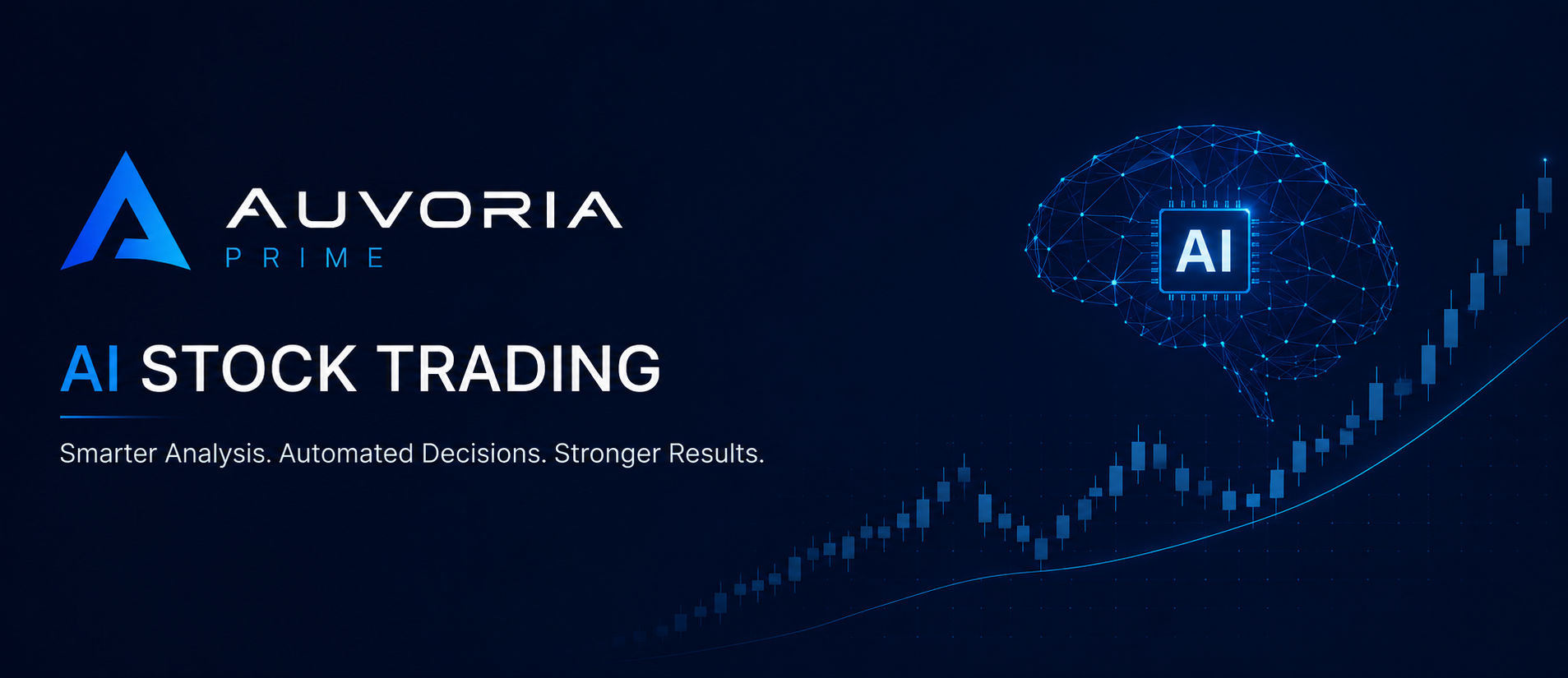
AI stock trading refers to the use of artificial intelligence technologies to analyze financial markets, identify potential opportunities, and assist with trading decisions.
Unlike traditional trading methods that rely heavily on manual analysis, AI systems can process large volumes of data simultaneously. These systems use advanced algorithms, machine learning models, and statistical analysis to evaluate market conditions and generate insights.
AI-powered trading tools may analyze:
- Historical price data
- Technical indicators
- Economic news releases
- Market sentiment
- Trading volume
- Volatility patterns
- Correlations between assets
The goal is to identify patterns that may be difficult or impossible for humans to recognize in real time.
Although the term “AI stock trading” focuses on stocks, many AI trading technologies are also used in forex, commodities, cryptocurrencies, and indices.
How Artificial Intelligence Works in Trading
Artificial intelligence is designed to learn from data. Rather than simply following a fixed set of rules, many AI systems continuously evaluate information and adapt to changing market conditions.
A typical AI trading process involves:
Data Collection
The system gathers information from multiple sources, including:
- Price charts
- Economic reports
- Financial statements
- Market news
- Social media sentiment
- Trading volume
Pattern Recognition
Machine learning models analyze historical relationships between various market factors.
For example, an AI system may identify that certain combinations of:
- Volume spikes
- Trend direction
- Volatility levels
- Economic conditions
have historically preceded specific market movements.
Decision Generation
Based on its analysis, the AI system may generate:
- Buy signals
- Sell signals
- Risk assessments
- Market forecasts
Continuous Improvement
Many AI systems continue learning as new market data becomes available, helping refine their analytical models over time.
Why AI Stock Trading Is Becoming More Popular
Several factors are contributing to the rapid growth of AI-powered trading.
Increased Market Complexity
Financial markets are influenced by countless variables.
Investors must consider:
- Interest rates
- Inflation data
- Economic growth
- Corporate earnings
- Global events
- Market sentiment
AI systems can evaluate these factors far more quickly than a human trader.
Faster Access to Information
Markets move rapidly.
Artificial intelligence can process thousands of data points in seconds, helping traders react faster to changing conditions.
Reduced Emotional Decision-Making
One of the biggest challenges for traders is controlling emotions.
Common emotional mistakes include:
- Panic selling
- Fear of missing out (FOMO)
- Overtrading
- Revenge trading
- Holding losing positions too long
AI-driven systems follow predefined logic and data-driven analysis rather than emotional impulses.
Growing Accessibility
Advanced trading technology was once available primarily to large financial institutions and hedge funds.
Today, AI-powered tools are increasingly accessible to retail traders, making sophisticated market analysis available to a broader audience.
Key Benefits of AI Trading Across Financial Markets
Enhanced Data Analysis
Humans have limits when it comes to processing information.
AI systems can analyze:
- Thousands of stocks
- Multiple forex pairs
- Commodity markets
- Economic indicators
all at the same time.
This expanded analytical capability helps traders identify opportunities they may otherwise overlook.
Get Kraitos Elite Now!
Supercharge your trading with our expert advisors. Start your journey today!
Improved Efficiency
AI significantly reduces the time required for market analysis.
Instead of spending hours reviewing charts and reports, traders can leverage AI-generated insights to streamline their decision-making process.
Consistency
Successful trading often requires discipline and consistency.
AI systems help maintain a structured approach by applying the same analytical process regardless of market conditions.
Better Risk Assessment
Risk management remains one of the most important aspects of trading.
AI can assist by evaluating:
- Market volatility
- Position sizing
- Correlations between assets
- Historical risk patterns
This information may help traders make more informed risk-management decisions.
Market Monitoring Around the Clock
Financial markets operate across multiple global sessions.
AI systems can continuously monitor opportunities even when traders are not actively watching charts.
AI Stock Trading and Machine Learning
Machine learning is one of the most important technologies behind AI trading.
Machine learning systems identify relationships within data and use those relationships to improve future predictions.
For example, a machine learning model might analyze:
- Ten years of stock market data
- Thousands of economic events
- Market reactions to earnings reports
The model then attempts to identify recurring patterns that may offer predictive value.
Over time, machine learning systems may improve their performance by incorporating additional data and refining their analytical models.
This capability makes machine learning particularly valuable in financial markets where conditions constantly evolve.
AI Trading in Stocks
Stocks remain one of the most common applications of AI trading technology.
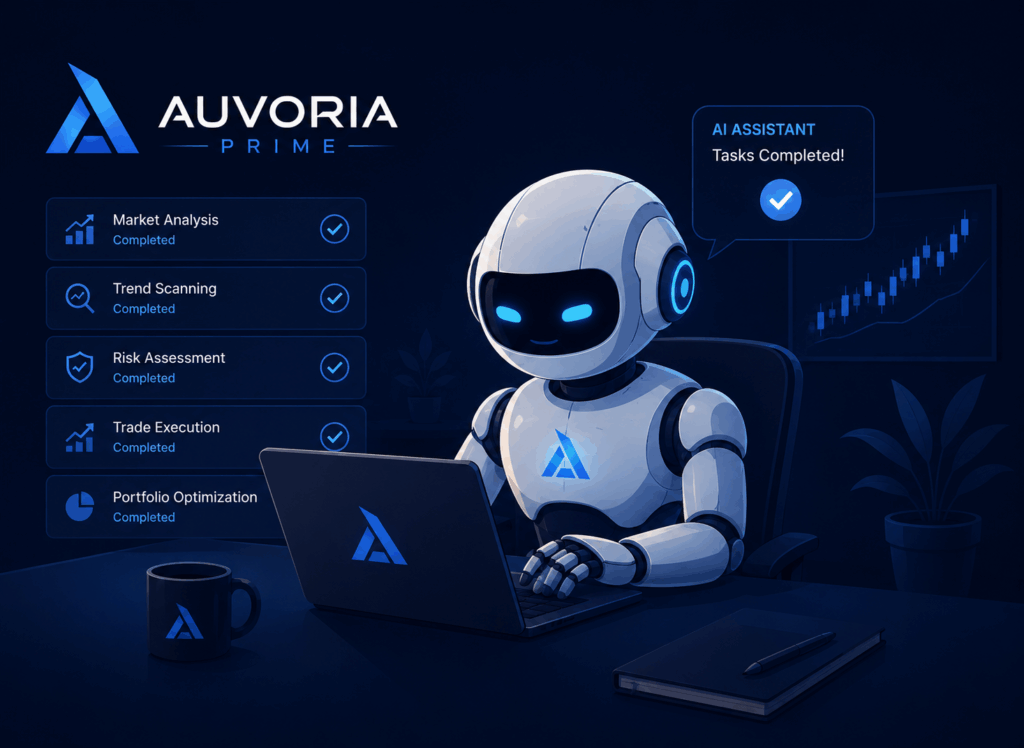
AI systems can assist stock traders by:
- Screening thousands of companies
- Identifying technical setups
- Monitoring earnings reports
- Evaluating market sentiment
- Detecting unusual trading activity
For active traders, this can significantly reduce the workload associated with stock selection and analysis.
Long-term investors may also use AI tools to assist with portfolio analysis and market research.
AI Trading Beyond Stocks
Although stock trading receives most of the attention, artificial intelligence is increasingly used across various financial markets.
Forex Markets
The forex market operates 24 hours a day and involves enormous trading volume.
AI can help traders analyze:
- Currency strength
- Economic releases
- Interest rate changes
- Trend development
Commodities
Commodity prices are often influenced by:
- Supply and demand
- Weather conditions
- Geopolitical developments
- Economic growth
AI systems can process these variables and identify potential opportunities.
Indices
Major indices such as the S&P 500, Nasdaq, and Dow Jones are heavily influenced by economic and corporate developments.
AI can assist traders by identifying broader market trends and shifts in sentiment.
Can AI Predict the Market?
One of the most common misconceptions is that artificial intelligence can perfectly predict future market movements.
The reality is more complicated.
Financial markets are influenced by countless variables, many of which are impossible to forecast with complete accuracy.
AI does not predict the future with certainty.
Instead, it:
- Identifies probabilities
- Detects patterns
- Evaluates market conditions
- Provides data-driven insights
Even the most advanced AI systems experience losing trades and periods of underperformance.
Successful traders understand that AI should be viewed as a tool that supports decision-making rather than a guaranteed prediction machine.
Risks and Limitations of AI Stock Trading
While AI offers many advantages, it also has limitations.
Market Uncertainty
Unexpected events can impact markets without warning.
Examples include:
- Natural disasters
- Political developments
- Economic crises
- Corporate scandals
No AI system can perfectly anticipate every market event.
Data Quality Issues
AI systems depend heavily on data quality.
Incomplete or inaccurate data can negatively impact performance.
Overreliance on Technology
Traders should avoid blindly following any automated system.
Understanding market fundamentals remains important.
Changing Market Conditions
Strategies that performed well historically may not perform the same way in future environments.
Markets constantly evolve, requiring ongoing adaptation.
How AI Supports Modern Trading Strategies
AI technology can complement many different trading approaches.
Trend Trading
AI can identify:
- Emerging trends
- Momentum shifts
- Breakout opportunities
Swing Trading
Swing traders may use AI-generated analysis to identify potential entry and exit opportunities.
Portfolio Management
Investors can leverage AI to evaluate:
- Diversification
- Risk exposure
- Asset allocation
Automated Trading Systems
Some traders use automated systems that execute trades based on predefined criteria generated through advanced analysis.
Automation can improve efficiency while reducing emotional interference.
The Future of AI in Financial Markets
Artificial intelligence will likely play an increasingly important role in the future of trading and investing.
Several trends are driving this growth:
Improved Computing Power
More powerful technology allows AI systems to process larger datasets faster than ever before.
Better Machine Learning Models
Machine learning algorithms continue becoming more sophisticated and accurate.
Greater Accessibility
Retail traders now have access to tools that were once reserved for institutional investors.
Integration with Trading Platforms
AI-powered analytics and automation tools are becoming increasingly integrated into modern trading environments.
As adoption grows, traders who understand how to effectively use AI may gain valuable advantages in market analysis and decision-making.
How Traders Can Benefit from AI-Powered Solutions
Artificial intelligence is not about replacing traders.
Instead, it is about enhancing decision-making through:
- Faster analysis
- Better risk assessment
- Increased efficiency
- Reduced emotional bias
By combining human judgment with advanced analytical technology, traders can potentially make more informed decisions in rapidly changing market environments.
Many investors are discovering that AI-driven tools can help simplify the research process while providing deeper insights into market behavior.
The most successful approach often involves using AI as a powerful assistant rather than relying on it as a standalone solution.
Final Thoughts
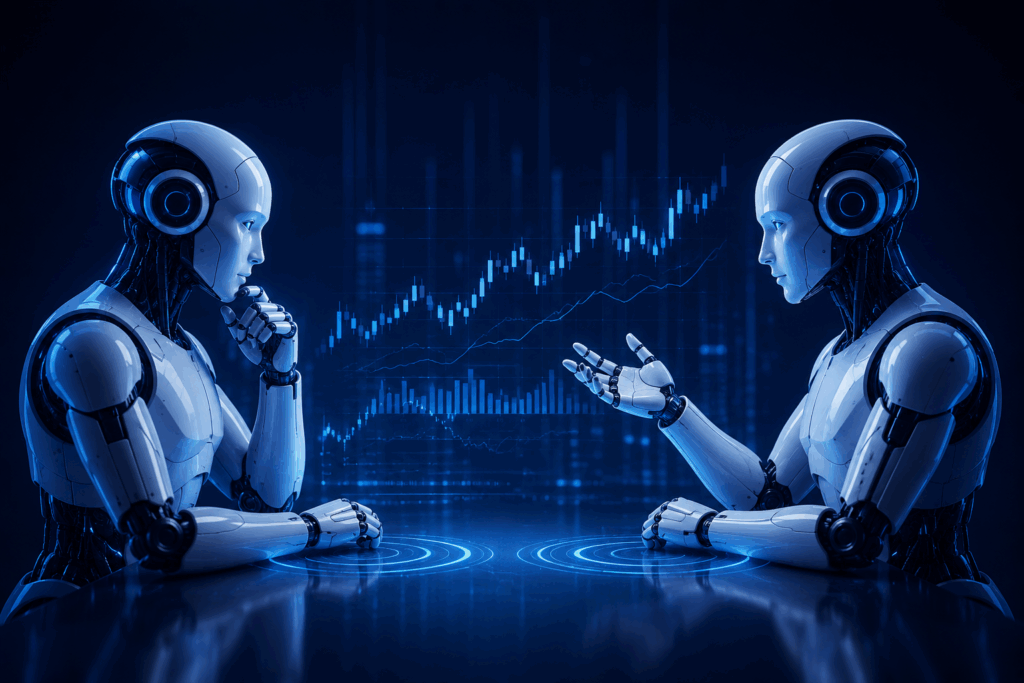
AI stock trading represents one of the most significant technological developments in modern financial markets. By leveraging artificial intelligence, traders can analyze larger amounts of data, identify opportunities more efficiently, and reduce the impact of emotional decision-making.
While no technology can eliminate risk or guarantee success, AI provides valuable tools that can help investors better understand market conditions across stocks, forex, commodities, and indices.
As artificial intelligence continues to evolve, its influence on trading and investing is likely to expand even further. Traders who take the time to understand these technologies and integrate them into a disciplined trading approach may be better positioned to navigate the increasingly data-driven future of financial markets.
Disclaimer: Trading stocks, forex, commodities, indices, and other financial instruments involves risk and may not be suitable for all investors. Artificial intelligence and automated trading technologies do not guarantee profits or eliminate the risk of loss. Past performance does not guarantee future results. Always conduct your own research and consider seeking independent financial advice before making investment decisions.
FGP1 August 2026 Performance Overview
Geographic Restriction & Risk Notice FGP1 is geographically restricted and is not available to U.S. persons or residents. Trading involves substantial…
Best Robo Advisors: A Complete Guide to Automated Investing
Choosing how to invest has become easier than ever thanks to technology. One of the biggest innovations in recent years…
Best Day Trading App: What Traders Should Look for Before
Day trading has become more accessible than ever. With the rise of mobile technology, cloud-based platforms, and real-time market data,…
FGP1 July 2026 Performance Overview
Geographic Restriction & Risk Notice FGP1 is geographically restricted and is not available to U.S. persons or residents. Trading involves substantial…
London Session Forex Time: Everything Traders Need to Know About
The foreign exchange market operates 24 hours a day, five days a week. While trading is possible around the clock,…
FGP1 June 2026 Performance Overview
Geographic Restriction & Risk Notice FGP1 is geographically restricted and is not available to U.S. persons or residents. Trading involves substantial…