Table of Contents
- What Does Trading Explained Mean in CFD Trading?
- What Is a CFD?
- How Do CFDs Work?
- Why Many Traders Use CFDs
- Understanding Leverage in CFDs
- What Is Margin?
- The Difference Between Owning an Asset and Trading a CFD
- Common Costs in CFD Trading
- Main Risks of CFD Trading
- Risk Management Basics Every CFD Trader Should Know
- Are CFDs Good for Beginners?
- The Role of Strategy in CFD Trading
- Why Psychology Matters More Than Most People Expect
- CFDs Trading Explained in Simple Terms
- Who Should Approach CFD Trading Carefully?
- Final Thoughts on Trading Explained
- Disclaimer
If you have been searching for Trading Explained, chances are you want one thing above all else: a simple and honest explanation of how trading works in the real world. CFD trading often appears easy at first glance. You open a position, the market moves, and you either make money or lose money. Yet once you look a little closer, you realize there is much more to understand.
CFDs are popular because they allow traders to speculate on many different markets without owning the underlying asset. That can sound convenient, and in some ways it is. At the same time, convenience does not remove risk. In fact, because CFDs usually involve leverage, risk can become even more important.
This guide breaks down the subject in clear language. It explains what CFDs are, how they work, why traders use them, what costs may apply, and what risks should never be ignored. If you are new to CFDs or simply want a better foundation, this article will help you understand the basics in a practical way.
What Does Trading Explained Mean in CFD Trading?
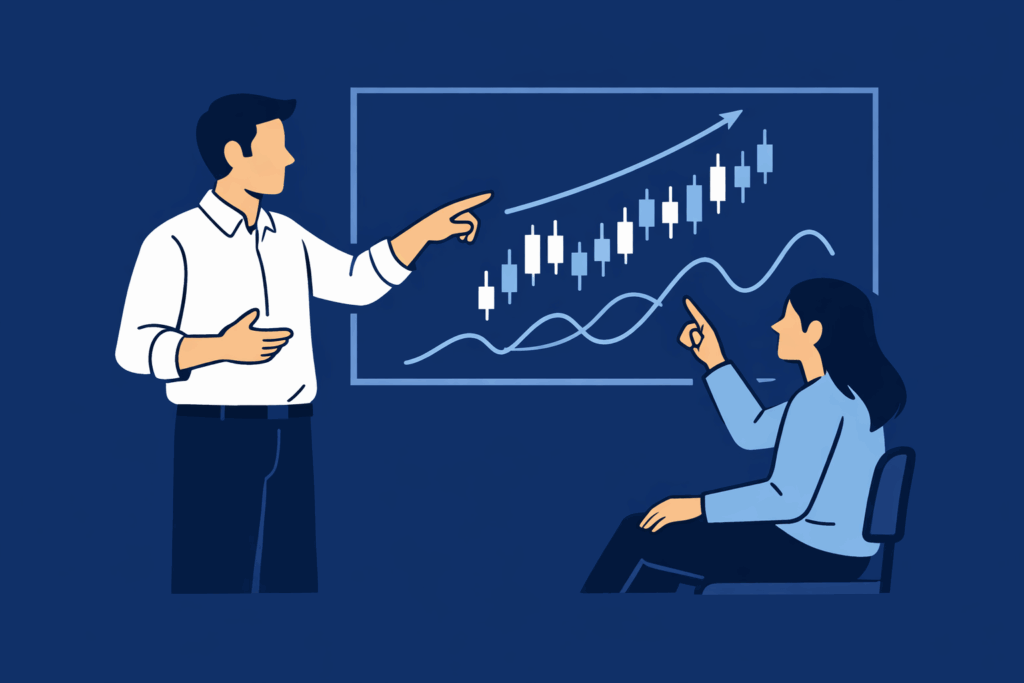
When people type Trading Explained into a search engine, they usually want a beginner-friendly explanation without confusing technical language. In CFD trading, that means understanding the basic structure behind a trade.
A Contract for Difference, or CFD, is a financial product that lets you trade on price movement. You do not buy the actual asset. Instead, you enter into a contract based on whether the price moves up or down from the moment you open the trade to the moment you close it.
That means your result depends on:
- The direction of the market
- The size of your position
- The amount of leverage used
- Trading costs
- How well you manage risk
So when we talk about Trading Explained, we are not just talking about pressing a buy or sell button. We are talking about understanding exposure, volatility, decision-making, and discipline.
What Is a CFD?
A CFD is short for Contract for Difference. It is called a derivative because its value comes from the price of another market.
With a CFD, you can speculate on markets such as:
- Forex pairs
- Stock indices
- Individual shares
- Commodities
- Precious metals
- Energy markets
- Cryptocurrency markets, depending on broker availability and regulation
For example, if you trade a CFD on gold, you do not own gold bars. If you trade a CFD on a stock index, you do not own the companies within that index. You are simply trading the price movement.
This is one reason CFDs appeal to active traders. They make it possible to access many markets through one account. Still, access does not guarantee success. It only provides opportunity, and every opportunity comes with risk.
How Do CFDs Work?
CFD trading follows a simple structure, even if market behavior itself is not simple.
A trader chooses a market and then decides whether the price is more likely to rise or fall.
- If the trader expects the price to rise, they open a buy trade
- If the trader expects the price to fall, they open a sell trade
Once the trade is open, the position gains or loses value as the market moves. When the trade is closed, the difference between the opening price and closing price determines the result, after any costs or fees are taken into account.
Here is a very simple example:
- You open a CFD buy trade on an asset priced at 100
- The price moves to 105
- If your position size supports it, that move may create a profit
Now the reverse:
- You open a CFD buy trade at 100
- The price drops to 95
- That move creates a loss
The idea is easy to understand. The challenge comes from the real-world conditions that surround the trade, such as speed, volatility, leverage, slippage, and emotion.
Why Many Traders Use CFDs
CFDs are widely used for a few clear reasons. Traders are often attracted to the flexibility they offer.
Access to multiple markets
A CFD account can give access to a broad range of instruments. This makes it easier for traders to follow opportunities across different sectors.
Ability to trade rising or falling markets
CFDs allow traders to take positions in both directions.
- A long trade aims to profit if price rises
- A short trade aims to profit if price falls
This flexibility is useful in fast-moving markets. However, it does not reduce the need for analysis or discipline.
Use of leverage
Leverage allows traders to control a larger position with less starting capital. This increases exposure, which can increase gains or losses.
Short-term market participation
CFDs are often used by traders who focus on short-term price movements rather than long-term asset ownership.
These features can make CFDs attractive, but they should never be viewed as a shortcut to easy profits. The same tools that create opportunity can also create fast losses.
Understanding Leverage in CFDs
Leverage is one of the most important concepts in any Trading Explained discussion about CFDs.
Leverage means you can open a larger position than your cash balance would normally allow. Instead of paying the full value of the position, you put up a smaller amount known as margin.
For example, a trader may control a position worth several thousand dollars while only committing a fraction of that amount as margin.
This creates two very different possibilities:
- Profits can grow faster
- Losses can grow faster
That second point matters just as much as the first. New traders often focus too much on how leverage increases potential returns. More experienced traders focus first on how leverage increases risk.
A small move in the market can have a large effect on a leveraged position. That is why leverage should be treated with respect, not excitement.
What Is Margin?
Margin is the amount of money required to open and maintain a leveraged trade.
It is important to understand that margin is not the same as risk, although the two are closely connected. A small margin requirement can still lead to a large loss if the position size is too big for the account.
Here is why margin matters:
- It determines whether you can open a trade
- It affects how much free capital remains in your account
- It influences how close you may be to a margin call or stop-out
If the market moves against your position and your account equity falls too far, your broker may reduce or close positions automatically.
This is why smart traders do not just ask, “Can I open this trade?”
They also ask:
- How much can I afford to lose?
- How much of my account is exposed?
- What happens if the market spikes against me?
The Difference Between Owning an Asset and Trading a CFD
This is one of the most important distinctions for beginners.
When you own an asset directly, you hold the actual instrument. When you trade a CFD, you do not own the asset. You only trade its price movement.
Here is the difference in simple terms:
Owning the asset
- You buy the actual stock, commodity, or other instrument
- Your position is tied to direct ownership
- Your strategy may be longer term
Trading a CFD
- You do not own the underlying market
- You speculate on price movement only
- The trade is often shorter term and more leveraged
This difference shapes the entire experience. CFDs are designed more for trading than for investing.
Common Costs in CFD Trading
One mistake beginners make is focusing only on price direction. In reality, the market does not need to move very far for costs to matter.
Common CFD trading costs may include:
- Spread
- Commission
- Swap or overnight financing fees
- Potential slippage
- Currency conversion fees, depending on the account
Spread
The spread is the difference between the buy price and sell price. This is a common cost built into many trades.
Commission
Some brokers charge commissions on specific instruments or account types.
Overnight fees
If you hold a CFD position overnight, financing charges may apply. These can add up over time, especially for swing traders or long-held positions.
Slippage
In fast markets, the actual execution price may differ from the intended price.
Costs should always be part of the trading plan. A setup that looks good on paper may be much less attractive after costs are included.
Main Risks of CFD Trading
Any honest article about Trading Explained must spend serious time on risk. CFDs are not just another simple financial product. They can be complex and they can be unforgiving.
Leverage risk
Leverage increases both upside and downside exposure. A trade can move against you quickly.
Volatility risk
Markets can move sharply during news releases, low-liquidity periods, or major events.
Gap risk
Prices can jump from one level to another without trading through every price in between. This can make stop-loss execution less predictable.
Emotional risk
Fear, greed, impatience, and revenge trading can damage performance even more than poor analysis.
Overtrading
Easy access to many instruments can lead traders to take too many positions without enough quality or discipline.
Poor risk management
A trader may be right several times and still lose overall if just one oversized trade goes badly.
This is why risk management is not optional. It is the foundation of survival.
Risk Management Basics Every CFD Trader Should Know
A good trading plan is not built only around entries. It is built around protection.
Key risk management habits include:
- Using appropriate position sizes
- Setting stop-loss levels
- Avoiding excessive leverage
- Limiting total account exposure
- Keeping emotions under control
- Reviewing trades regularly
Many traders focus on how much they can make. Better traders also focus on how much they are willing to lose before they even enter a trade.
That shift in mindset matters.
Are CFDs Good for Beginners?
CFDs can be accessible to beginners, but they are not always ideal for people who want a simple or low-risk introduction to financial markets.
A beginner should understand that CFDs involve:
- Leverage
- Rapid price movement
- Costs
- Psychological pressure
- Real capital risk
That does not mean beginners must avoid CFDs forever. It means they should approach them carefully.
A better starting attitude is:
- Learn first
- Practice slowly
- Focus on risk before profit
- Never trade money you cannot afford to lose
The Role of Strategy in CFD Trading
No trading product works well without structure. CFDs are no exception.
A strategy gives a trader a framework for decision-making. It helps answer questions like:
- What market am I trading?
- What setup am I looking for?
- Where will I enter?
- Where will I exit if wrong?
- Where will I take profit?
- How much will I risk?
Without a strategy, trading becomes reactive. Traders chase price, second-guess themselves, and make inconsistent decisions.
A strategy does not need to be complicated. In fact, many strong strategies are built on simple rules. What matters most is consistency and discipline.
Why Psychology Matters More Than Most People Expect
Many new traders assume success depends mainly on chart knowledge. That is only part of the story.
A trader can understand patterns and still lose because of poor emotional control.
Common psychological mistakes include:
- Closing winners too early
- Holding losers too long
- Increasing size after losses
- Entering trades out of boredom
- Ignoring the trading plan
- Trading based on hope rather than evidence
This is why self-control is a real trading skill. Even the best setup can fail. A strong trader accepts that reality and stays disciplined.
CFDs Trading Explained in Simple Terms
Let us simplify it one more time.
A CFD allows you to:
- Trade price movement
- Go long or short
- Use leverage
- Access many markets
- Avoid owning the underlying asset
But CFDs also mean:
- Losses can happen quickly
- Costs can affect results
- Leverage can magnify mistakes
- Emotional decisions can become expensive
- Risk management is essential
That is the heart of CFDs Trading Explained.
Who Should Approach CFD Trading Carefully?
Almost everyone should approach CFDs with caution, but especially:
- Complete beginners
- People with no risk management plan
- Anyone expecting easy income
- Traders using money they cannot afford to lose
- People drawn mainly by leverage
CFD trading is not a shortcut. It is a tool. Like any powerful tool, it can be useful in skilled hands and harmful in careless hands.
Final Thoughts on Trading Explained
If you wanted Trading Explained in a way that makes sense without extra noise, the core message is simple: CFDs are flexible trading instruments that allow traders to speculate on price movement without owning the asset. They can be used across many markets and in both directions. They also carry meaningful risk, especially when leverage is involved.
Understanding how CFDs work is the first step. The next step is learning how to manage risk, control emotions, and approach the market with realistic expectations. No article can remove risk. No platform can remove uncertainty. What education can do is help traders make better decisions.
CFD trading may offer opportunity, but opportunity only becomes useful when paired with patience, planning, and discipline.
Disclaimer
CFDs are complex instruments and come with a high risk of losing money rapidly due to leverage. This article is for educational and informational purposes only and should not be considered financial, investment, or trading advice. Trading involves risk, and past performance does not guarantee future results. Always do your own research, understand the product you are trading, and consider your personal financial situation and risk tolerance before making any trading decisions.

Best Robo Advisors: A Complete Guide to Automated Investing
Choosing how to invest has become easier than ever thanks to technology. One of the biggest innovations in recent years…
Best Day Trading App: What Traders Should Look for Before
Day trading has become more accessible than ever. With the rise of mobile technology, cloud-based platforms, and real-time market data,…
FGP1 July 2026 Performance Overview
Geographic Restriction & Risk Notice FGP1 is geographically restricted and is not available to U.S. persons or residents. Trading involves substantial…
London Session Forex Time: Everything Traders Need to Know About
The foreign exchange market operates 24 hours a day, five days a week. While trading is possible around the clock,…
FGP1 June 2026 Performance Overview
Geographic Restriction & Risk Notice FGP1 is geographically restricted and is not available to U.S. persons or residents. Trading involves substantial…
AI Stock Trading: How Artificial Intelligence Is Changing the Way
Artificial intelligence is transforming industries around the world, and financial markets are no exception. What once required hours of chart…