Table of Contents
- What Is an Online Trading Platform?
- Why Your Online Trading Platform Matters More Than Most Beginners Realize
- The Difference Between How Professionals and Amateurs Choose a Platform
- Key Feature One: Reliable Order Execution
- Key Feature Two: Strong Charting Tools
- Key Feature Three: Built-In Risk Management Tools
- Key Feature Four: Stability and Uptime
- Key Feature Five: Clear and Clean Interface
- Key Feature Six: Mobile Trading That Still Feels Practical
- Key Feature Seven: Performance Analytics and Trade Review
- Key Feature Eight: Watchlists, Alerts, and Workflow Tools
- Key Feature Nine: Educational Support That Encourages Better Habits
- Key Feature Ten: Compatibility With Different Trading Styles
- Common Mistakes Traders Make When Choosing an Online Trading Platform
- How to Compare Online Trading Platforms Properly
- Final Thoughts
- Disclaimer
Choosing the right online trading platform is one of the most important decisions any trader can make. Many beginners spend too much time thinking about indicators, market direction, or how much profit they want to make. In reality, the platform itself plays a huge role in the overall trading experience.
Your platform is where you analyze charts, place trades, manage risk, monitor open positions, and review performance. If the platform is confusing, slow, unstable, or missing key features, it becomes much harder to trade with discipline. If it is clear, reliable, and built with serious traders in mind, it can help you stay organized and make better decisions.
This is where the difference between professionals and amateurs becomes easy to spot. Amateur traders often choose an online trading platform based on appearance, hype, or what they saw someone mention on social media. Professional traders look deeper. They care about execution, reliability, charting quality, risk controls, and whether the platform supports consistent decision-making over time.
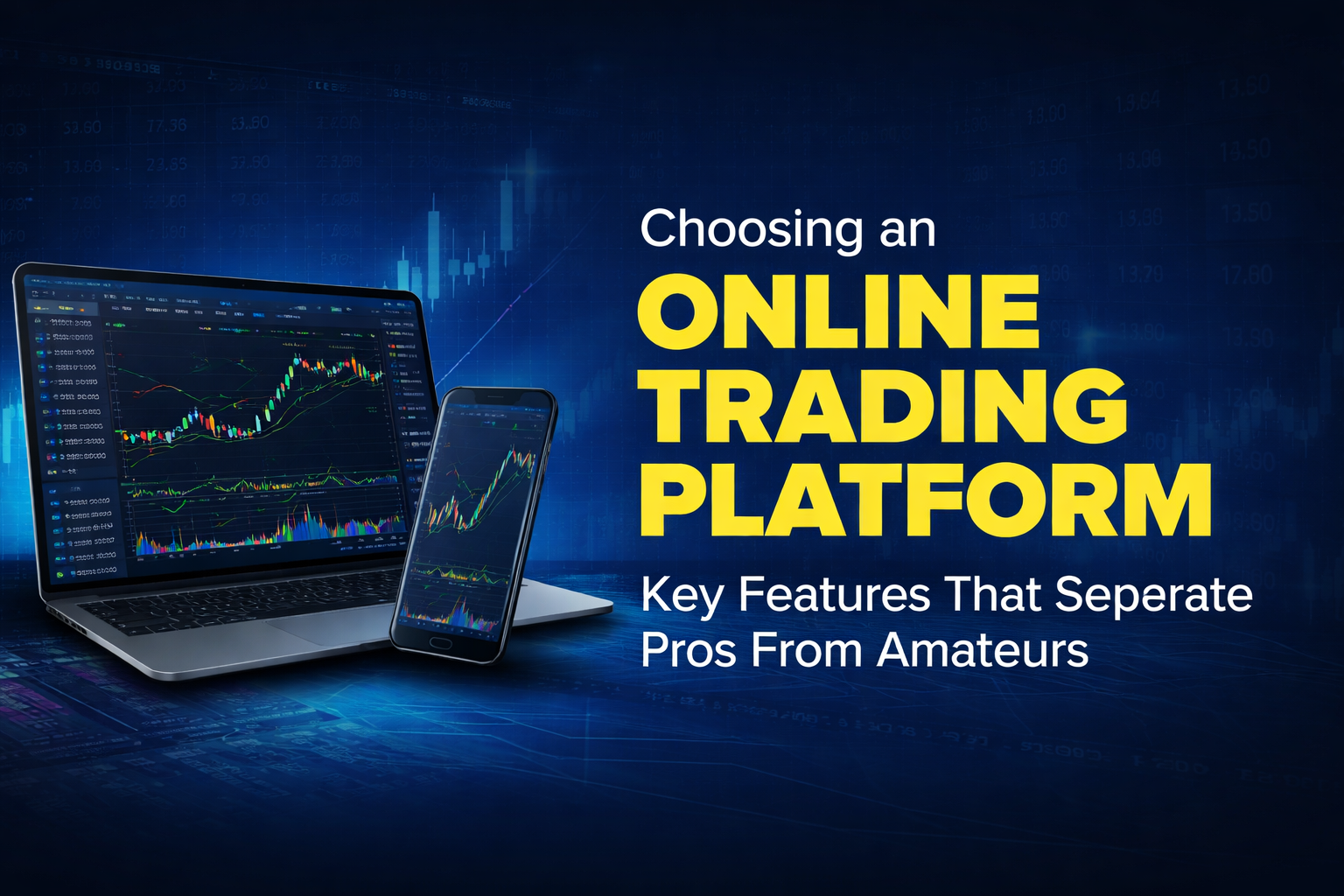
In this article, we will break down what an online trading platform actually is, why it matters so much, and which features truly separate a professional setup from an amateur one.
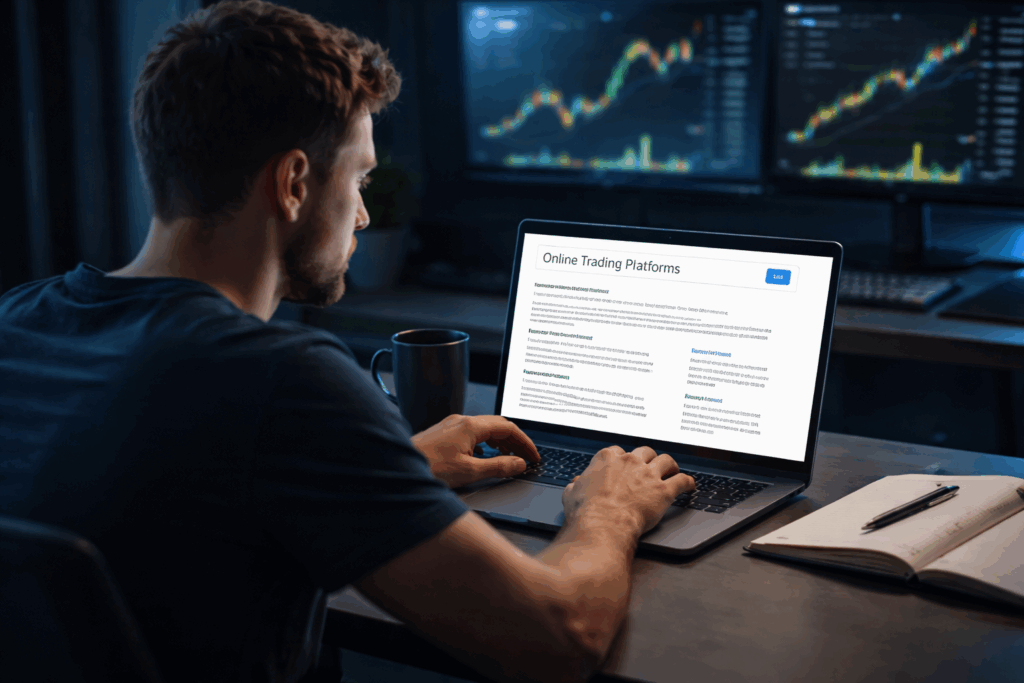
What Is an Online Trading Platform?
An online trading platform is the software traders use to access financial markets and place trades. It acts as the main workspace for everything related to trading.
A quality platform usually allows you to:
- View live market prices
- Open and close trades
- Analyze charts
- Use indicators and drawing tools
- Set stop loss and take profit levels
- Monitor account balance and margin
- Review trade history and performance
Depending on the provider, an online trading platform may offer access to markets such as:
- Forex
- Commodities
- Indices
- Stocks
- Cryptocurrencies
- CFDs
At a basic level, many platforms may seem similar. They all appear to let you open a chart and place a trade. However, once you begin using them in real conditions, the differences become obvious. Some are built for convenience only. Others are built for serious decision-making.
That is why choosing the right one matters so much.
Why Your Online Trading Platform Matters More Than Most Beginners Realize
A lot of new traders assume success depends only on strategy. Strategy matters, of course, but the platform affects how easily you can actually apply that strategy in real time.
For example, you might spot a great setup and know exactly where you want to enter. But if your platform is lagging, freezing, or making order placement difficult, that opportunity can quickly turn into a mistake. A bad platform creates friction. A good platform reduces it.
Your online trading platform affects:
- How quickly you can react
- How well you can manage risk
- How clearly you can read the market
- How easily you can review your trades
- How much confidence you have during busy market conditions
Professional traders understand this very well. They do not see the platform as just a tool. They see it as part of their trading environment. If that environment is weak, performance usually suffers.
The Difference Between How Professionals and Amateurs Choose a Platform
The biggest difference is mindset.
Amateurs often choose a platform based on things like:
- A nice-looking interface
- Popularity online
- Simple advertising promises
- What seems easiest at first glance
- Excitement around fast profits
Professionals choose an online trading platform by asking better questions, such as:
- Is execution reliable?
- Does it remain stable during volatile sessions?
- Are the charting tools strong enough?
- Can risk be managed clearly?
- Does it offer proper account analytics?
- Is the mobile version actually useful?
- Can it support my trading style long term?
That difference in thinking usually leads to better choices.
Key Feature One: Reliable Order Execution
One of the first things serious traders look at is execution quality. A platform may look impressive, but if it cannot process orders properly, that is a major problem.
A good online trading platform should allow traders to:
- Enter positions quickly
- Exit positions without confusion
- Place pending orders with ease
- Set stop losses and take profits accurately
- Handle fast market conditions as smoothly as possible
Execution matters because price moves quickly. A small delay can affect your entry, your exit, and the outcome of the trade. That becomes even more important during major market sessions or news events.
Professional traders know that it is not enough for execution to be fast only when the market is calm. It also needs to be dependable when conditions get busy. That is why they pay close attention to this feature.
Amateurs often notice execution issues only after they lose money because of them. Professionals try to avoid that problem from the beginning.
Key Feature Two: Strong Charting Tools
Charts are at the center of almost every trading decision. If charting is weak, it becomes harder to read the market properly. A quality online trading platform should have charting tools that are clear, responsive, and practical.
Important charting features often include:
- Multiple timeframes
- Drawing tools
- Technical indicators
- Clean zoom and scroll functions
- Custom chart layouts
- Easy switching between markets
- The ability to save templates
Amateur traders sometimes care too much about how attractive a chart looks. Professional traders care more about whether it helps them think clearly. They want charts that are easy to read and simple to work with.
A good charting environment helps traders identify:
- Trends
- Reversals
- Support and resistance
- Market structure
- Breakouts
- Pullbacks
- Momentum shifts
The more naturally you can analyze the market, the easier it becomes to follow a repeatable process.
Key Feature Three: Built-In Risk Management Tools
This is one of the clearest areas where pros and amateurs separate.
Amateurs often focus on the trade idea first. Professionals focus on risk first.
A serious online trading platform should make risk management simple and visible. Before placing any trade, you should be able to understand:
- How much capital is at risk
- Where the stop loss is placed
- Where the take profit is placed
- How large the position is
- How much margin is being used
- How the trade affects overall exposure
Strong risk management features help traders avoid careless decisions. They also make it easier to stay consistent over time.
Useful platform risk tools may include:
- Stop loss placement
- Take profit placement
- Position size information
- Margin display
- Account exposure visibility
- Trade modification options
- Clear open position tracking
If a platform makes risk hard to manage, traders are more likely to skip important steps. That usually leads to inconsistent behavior and larger mistakes.
Professional traders want a platform that supports discipline, not one that encourages guesswork.
Key Feature Four: Stability and Uptime
A platform might seem fine when the market is slow. The real test comes during busy hours, major news releases, and sharp price movement. That is when weak systems start to show problems.
A good online trading platform should remain stable when traders need it most.
That means it should:
- Stay connected during active sessions
- Load charts without major delay
- Keep open positions visible
- Allow trade adjustments smoothly
- Avoid freezing during sudden market movement
Stability matters because access is everything in trading. If you cannot monitor or manage your trade when conditions change, you are exposed to unnecessary risk.
Professionals respect platform stability because they know technical problems can damage even a solid trading plan. Amateurs often think about this too late.

Key Feature Five: Clear and Clean Interface
A cluttered platform often leads to cluttered thinking. Trading already requires focus, patience, and quick decision-making. A confusing layout adds unnecessary stress.
A strong online trading platform should have an interface that feels clear and organized. It should be easy to move between sections without wasting mental energy.
A clean platform should make it easy to access:
- Charts
- Watchlists
- Open trades
- Account balance
- Order history
- Alerts
- Settings
Professional traders value efficiency. They want to spend their energy on the market, not on trying to figure out where buttons are or how to make the platform do something basic.
A good interface does not need to be overly simple. It just needs to make important tasks easy.
Key Feature Six: Mobile Trading That Still Feels Practical
Most traders today want access on mobile as well as desktop. That makes sense. However, not every mobile platform is actually good enough for real trade management.
A quality online trading platform should have a mobile version that allows you to:
- Monitor trades
- Review charts
- Place and close orders
- Adjust stop losses and take profits
- Check alerts
- Track account activity
Professionals may still prefer deeper analysis on a larger screen, but they want the confidence of knowing they can manage positions from a mobile device if needed.
A poor mobile app can create extra risk. It may feel too limited, too confusing, or too delayed. That is not good enough for serious traders.
When comparing platforms, the mobile version should not be treated like a small bonus. It should be treated as part of the full trading experience.
Key Feature Seven: Performance Analytics and Trade Review
One of the biggest habits that helps traders improve is reviewing their results properly. That is why a strong online trading platform should offer account analytics and trade history that are actually useful.
These features help traders see patterns in their behavior and results.
Good analytics may show:
- Total trades
- Win rate
- Average win
- Average loss
- Drawdown
- Profit and loss history
- Trade duration
- Performance by asset
- Performance over time
Amateur traders often judge themselves one trade at a time. Professional traders look at larger data sets. They want to understand whether their process is working, where they are making mistakes, and what needs improvement.
A platform that supports trade review helps traders become more disciplined and data-driven.
Key Feature Eight: Watchlists, Alerts, and Workflow Tools
Trading is not only about execution. It is also about preparation. The best traders do not rely on random reactions. They use structure.
A useful online trading platform should include tools that help traders stay organized, such as:
- Watchlists
- Price alerts
- Market filters
- Saved templates
- Favorite asset tracking
- Notification settings
These features make a big difference in daily workflow. They help traders stay focused on the right opportunities without staring at charts all day.
For example:
- A watchlist helps you monitor selected markets
- A price alert tells you when a key level is reached
- A saved chart layout keeps analysis consistent
- Notifications help you react without over-watching the market
Professionals value tools that support routine. Amateurs often ignore them and end up trading more impulsively.
Key Feature Nine: Educational Support That Encourages Better Habits
Not every trader starts with the same experience level. Some are completely new. Others already understand market basics but need help with platform usage and structure. That is why educational support can be valuable.
Some online trading platform providers offer:
- Platform tutorials
- Webinars
- Beginner guides
- Market education
- Tool walkthroughs
- Strategy examples
Good educational support should help traders:
- Understand how to use the platform
- Learn how to manage risk better
- Build more realistic expectations
- Improve overall discipline
The key is quality. Education should not be based on unrealistic promises. It should be based on helping traders think more clearly and use the platform properly.
Professionals know there is no shortcut to skill. A strong learning environment respects that.
Key Feature Ten: Compatibility With Different Trading Styles
Not every trader uses the market in the same way. Some people trade intraday. Others swing trade. Some use automated systems. Others rely only on manual chart reading.
That is why choosing an online trading platform should also come down to fit.
A trader should ask:
- Does this platform support the assets I want to trade?
- Does it match my time horizon?
- Does it allow the kind of analysis I prefer?
- Can it grow with me if my needs change?
- Is it suitable for manual or automated trading, depending on my approach?
Professional traders choose based on practical compatibility. They do not simply follow hype or choose whatever is most talked about online.
That mindset leads to a better long-term fit.
Common Mistakes Traders Make When Choosing an Online Trading Platform
A lot of people make the same mistakes when choosing a platform. Avoiding these can save time, frustration, and money.
Focusing only on how the platform looks
A nice interface is helpful, but appearance alone means very little if the execution is poor or the risk tools are weak.
Ignoring risk management features
Some traders do not realize how important stop loss tools, margin visibility, and position sizing are until they have already made avoidable mistakes.
Choosing based on hype
Just because a platform is popular does not mean it is right for your trading style or your goals.
Overlooking mobile performance
A platform may work well on desktop but feel limited or unreliable on mobile. That matters if you ever need to manage trades away from your desk.
Not reviewing analytics and trade history
Without useful reporting, it becomes harder to learn from mistakes and improve over time.
Failing to think long term
A platform that feels fine for a beginner today may become limiting later. It is better to choose something that can grow with you.
How to Compare Online Trading Platforms Properly
The best way to compare platforms is to go beyond the surface. Do not focus only on the homepage or the first impression. Explore how the platform actually works.
When comparing an online trading platform, look at:
- Execution quality
- Charting tools
- Risk management features
- Platform stability
- Mobile access
- Watchlists and alerts
- Trade history and analytics
- Ease of navigation
- Educational support
- Suitability for your trading style
It also helps to ask yourself a few simple questions:
- Does this platform help me stay organized?
- Does it make risk management easier?
- Can I review my results clearly?
- Will it still suit me as I gain experience?
- Does it support disciplined decision-making?
Those questions usually reveal much more than marketing language ever will.
Final Thoughts
Choosing an online trading platform is not a small decision. It is one of the foundations of your entire trading setup. The platform affects how you see the market, how you execute trades, how you manage risk, and how you grow over time.
That is why the gap between professionals and amateurs often starts here.
Professionals choose platforms based on structure, functionality, and reliability. Amateurs often choose based on convenience, appearance, or excitement. The result is very different.
A strong online trading platform will not guarantee success. No platform can do that. However, the right one can support better habits, cleaner execution, stronger risk control, and more consistent decisions.
If you want to trade with a more professional mindset, take platform selection seriously. The right environment can make a real difference in the way you operate and improve.
Disclaimer
Trading involves risk and is not suitable for every person. This article is provided for educational and informational purposes only and should not be considered financial advice, investment advice, or a recommendation to use any specific platform, product, or strategy. Past performance does not guarantee future results. Always do your own research and apply proper risk management before making any trading decisions.
Quantitative Trading: A Complete Guide to Data-Driven Trading Strategies
Quantitative trading has changed the way many traders approach financial markets. Instead of making every decision based on instinct, chart…
CFDs Meaning Trading: A Complete Guide to Understanding Contracts for
One term that frequently appears in online trading is CFDs. If you’ve searched for CFDs meaning trading, you’re likely looking…
FGP1 August 2026 Performance Overview
Geographic Restriction & Risk Notice FGP1 is geographically restricted and is not available to U.S. persons or residents. Trading involves substantial…
Best Robo Advisors: A Complete Guide to Automated Investing
Choosing how to invest has become easier than ever thanks to technology. One of the biggest innovations in recent years…
Best Day Trading App: What Traders Should Look for Before
Day trading has become more accessible than ever. With the rise of mobile technology, cloud-based platforms, and real-time market data,…
FGP1 July 2026 Performance Overview
Geographic Restriction & Risk Notice FGP1 is geographically restricted and is not available to U.S. persons or residents. Trading involves substantial…