Table of Contents
- Introduction
- 1. What Is Technical Analysis?
- 2. The Role of Psychology in Technical Analysis
- 3. Why Technical Analysis Matters in Forex Trading
- 5. The Most Popular Technical Indicators
- 6. How to Build a Technical Trading Strategy
- 7. The Advantage of Combining AI With Technical Analysis
- 8. Risk Management: The Heart of Technical Trading
- 9. The Learning Curve of Technical Analysis
- 10. Conclusion: Technical Analysis as the Trader’s Compass
Introduction
In the world of Forex trading, success depends on much more than luck or intuition. Traders who consistently perform well rely on proven systems of analysis and disciplined decision-making. One of the most vital tools for understanding price movement and making informed trade entries is technical analysis.
Technical analysis provides traders with a way to interpret market behavior using price charts, indicators, and patterns. By studying how the market has moved in the past, traders can identify trends and potential turning points to guide their future decisions.
In this article, we’ll explore why technical analysis is essential in Forex trading, how it differs from fundamental analysis, and how traders—especially those using advanced tools like Auvoria Prime’s Expert Advisors (EAs)—can integrate it into their strategy for better results.
1. What Is Technical Analysis?
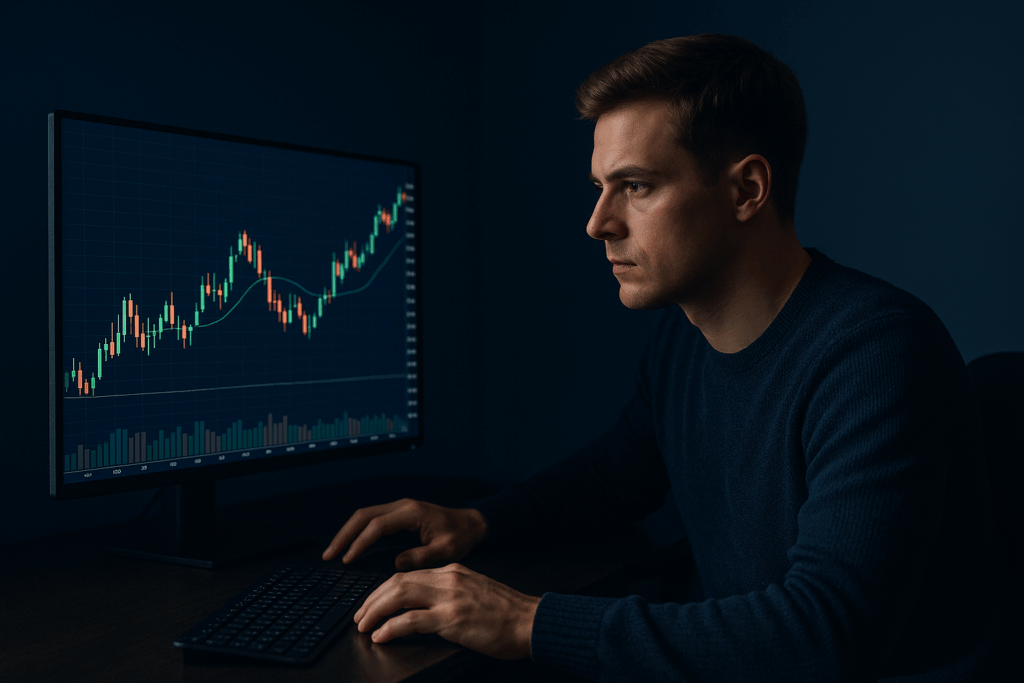
Technical analysis is the study of price movements and market behavior using charts, historical data, and mathematical indicators. The core idea is simple: price reflects everything. This means that all known information—economic data, geopolitical events, and even trader psychology—is already represented in price action.
Instead of focusing on what the market should do, technical analysis focuses on what the market is doing. Traders use this approach to find patterns and signals that can help forecast future price movements.
Common tools in technical analysis include:
- Trend lines and channels to identify the market direction.
- Support and resistance levels to find potential reversal zones.
- Indicators such as Moving Averages, RSI (Relative Strength Index), and MACD (Moving Average Convergence Divergence).
- Chart patterns like triangles, flags, and head-and-shoulders formations.
Each tool provides insight into different aspects of market behavior, and when combined, they can create a robust framework for decision-making.
2. The Role of Psychology in Technical Analysis
At its core, technical analysis is based on human psychology. Prices move because of collective human behavior—fear, greed, confidence, and uncertainty.
When many traders act in a similar way in response to market events, patterns emerge. Technical analysis helps visualize these emotional responses. For example, a sudden price spike after breaking resistance shows trader enthusiasm, while repeated bounces off support show hesitation to sell below a certain level.
By studying these reactions, technical traders can anticipate how others might behave in similar situations. This psychological insight gives them a strategic edge, allowing for more rational and less emotional trading decisions.
3. Why Technical Analysis Matters in Forex Trading
The Forex market operates 24 hours a day, five days a week, and is influenced by countless variables—from central bank announcements to geopolitical shifts. With so many moving parts, it’s impossible to predict every fundamental event. That’s where technical analysis shines.
Here’s why it’s crucial for Forex traders:
a. Identifies Market Trends
One of the biggest advantages of technical analysis is its ability to help traders identify market trends. Whether the market is trending upward (bullish), downward (bearish), or moving sideways (ranging), recognizing the direction early allows for better trade positioning and risk management.
b. Provides Clear Entry and Exit Signals
Indicators and patterns can provide specific trade signals—showing when to enter, when to exit, and where to place stop-loss or take-profit levels. This structure removes much of the guesswork and emotion from trading.
c. Works on All Timeframes
Technical analysis is flexible. Whether you’re a scalper looking for short-term opportunities or a swing trader focusing on longer trends, the same principles apply across different timeframes.
d. Complements Automated Trading
For traders using Auvoria Prime’s EAs like Kraitos, KraitosX, or Gearbox, technical analysis plays a key role. These AI-driven systems analyze technical data automatically, applying consistent strategies that are based on proven technical principles—often faster and more precisely than human traders can.
4. Technical vs. Fundamental Analysis
Both technical and fundamental analysis are valuable, but they serve different purposes.
- Fundamental analysis looks at the broader economic picture—interest rates, inflation, employment data, and political factors. It explains why the market might move.
- Technical analysis, on the other hand, focuses on how the market moves. It tracks the actual behavior of traders through price and volume data.
For example, if a central bank raises interest rates, fundamental analysis might predict a currency’s strength. But technical analysis helps you determine the right time to enter that trade—perhaps after a breakout or confirmation pattern.
The best traders combine both, using fundamentals to understand direction and technicals to time their execution.
5. The Most Popular Technical Indicators
To apply technical analysis effectively, traders often rely on specific tools. Below are some of the most used indicators in Forex trading:
a. Moving Averages (MA)
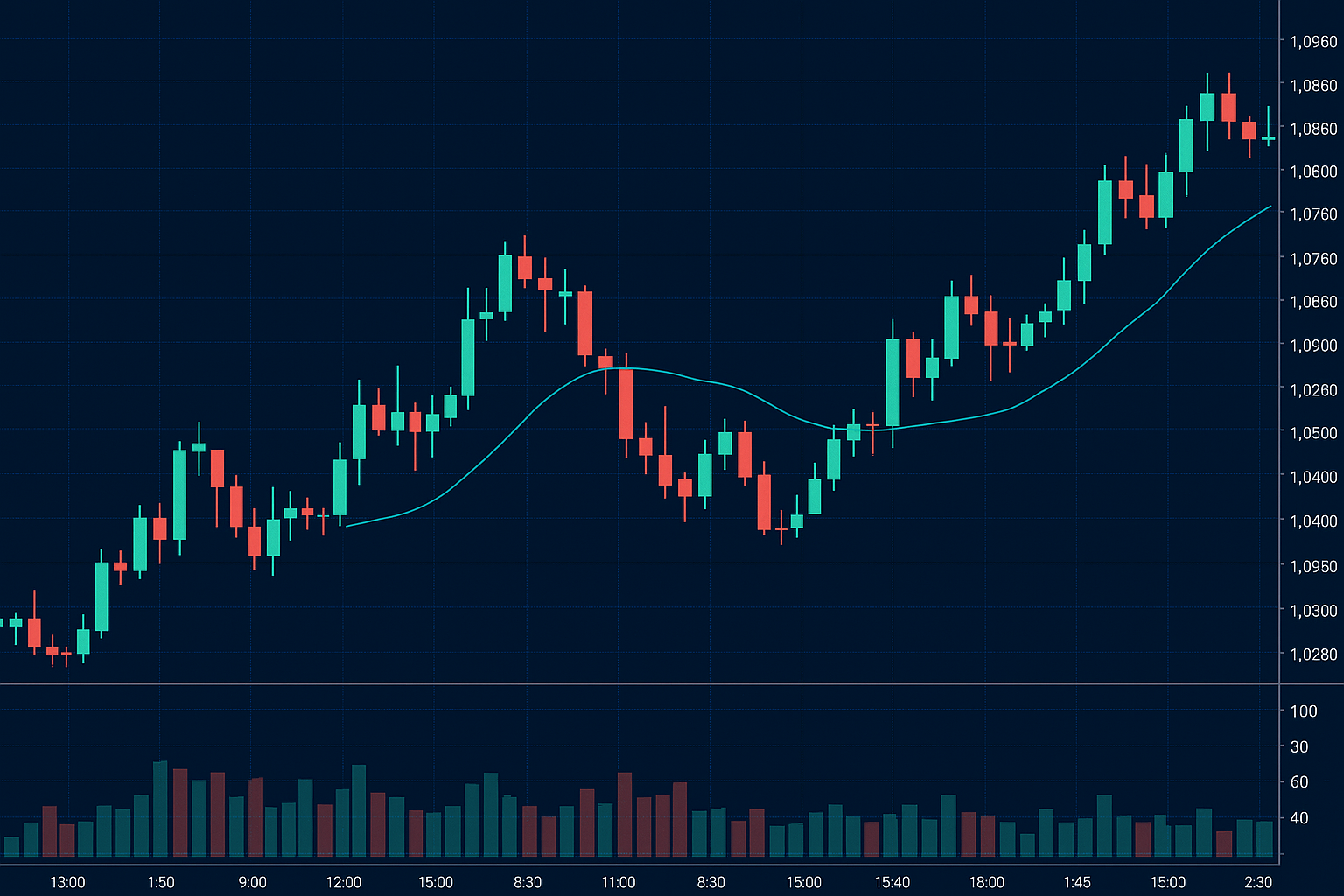
Moving averages smooth out price data to identify trends. A rising MA indicates an uptrend, while a falling MA signals a downtrend. The crossover of two MAs—such as the 50-day and 200-day—can indicate potential buy or sell signals.
b. Relative Strength Index (RSI)
RSI measures the speed and change of price movements. It identifies overbought (above 70) or oversold (below 30) conditions, helping traders anticipate reversals.
c. MACD (Moving Average Convergence Divergence)
MACD reveals changes in momentum. When the MACD line crosses above the signal line, it suggests bullish momentum; when it crosses below, it signals bearishness.
d. Bollinger Bands
These bands expand and contract based on volatility. When prices touch the upper band, it might signal overbought conditions; when they hit the lower band, oversold conditions.
e. Fibonacci Retracement
Traders use Fibonacci ratios (such as 38.2%, 50%, 61.8%) to find potential reversal levels within trends. They’re often used to plan retracement entries.
Each indicator provides a different view of the market, and combining them strategically helps filter false signals.
6. How to Build a Technical Trading Strategy
A successful trading strategy built on technical analysis should include clear rules, backtesting, and discipline.
Here’s a basic framework:
- Identify the Trend – Use moving averages or trend lines to determine market direction.
- Find Support and Resistance – Mark key levels where price previously reacted.
- Use Confirming Indicators – Combine at least two indicators for confirmation (e.g., RSI + MACD).
- Plan Entry and Exit – Define conditions for entering and exiting trades.
- Manage Risk – Set stop-loss and take-profit levels. Never risk more than you can afford to lose.
- Backtest and Refine – Test the strategy on historical data to see how it performs over time.
Auvoria Prime’s automated trading tools integrate these same principles, but with the added precision of AI-based analysis. The systems are tested across years of market data, designed to execute trades following predefined technical rules.
7. The Advantage of Combining AI With Technical Analysis
The rise of artificial intelligence has revolutionized technical trading. EAs can now process thousands of data points per second, scanning for chart patterns, trend confirmations, and risk signals across multiple pairs simultaneously.
This kind of automation brings several benefits:
- Consistency: AI never trades emotionally.
- Speed: Automated systems can execute faster than human reaction times.
- Optimization: Algorithms can adapt to different market conditions and optimize settings over time.
Auvoria Prime’s solutions take these benefits and combine them with transparency, backtesting, and user control—so traders remain in charge while leveraging advanced automation.
8. Risk Management: The Heart of Technical Trading
Even the best technical setups can fail. That’s why proper risk management is essential.
Technical analysis helps you define exactly where to place your stop-loss (the point where you exit a losing trade) and take-profit (where you lock in gains).
By analyzing past price swings and volatility, traders can determine position sizes that align with their risk tolerance. For example, if support is 50 pips below your entry, and you risk 1% of your capital, you can calculate lot size accordingly.
Automation tools like those from Auvoria Prime can apply these calculations precisely, maintaining consistent risk management across every trade.
9. The Learning Curve of Technical Analysis
Mastering technical analysis takes time and practice. Beginners often make the mistake of overloading charts with too many indicators or switching strategies frequently.
The key is simplicity and consistency.
Start by learning one or two indicators, studying how they behave under different market conditions. Keep a trading journal to track your decisions and emotions. Over time, patterns will become clearer, and your confidence will grow.
The good news is that you don’t have to do it all manually. Tools like Auvoria Prime’s EAs can help you learn while trading more efficiently, as they are based on proven technical foundations.

10. Conclusion: Technical Analysis as the Trader’s Compass
In Forex trading, technical analysis acts as a compass in a constantly shifting environment. It gives traders structure, clarity, and confidence—turning unpredictable price action into understandable signals.
While no analysis method guarantees profit, those who master technical tools and risk control are better positioned for long-term success. When paired with intelligent automation and disciplined mindset, technical analysis becomes a bridge between strategy and consistent performance.
Whether you trade manually or use automated systems, understanding why the market moves and how to read it technically is what separates a reactive trader from a professional one.
Disclaimer
Trading foreign exchange (Forex) involves substantial risk and is not suitable for all investors. Past performance does not guarantee future results. The use of automated systems such as Expert Advisors (EAs) carries its own risks and should only be undertaken with proper knowledge and risk control. Always trade responsibly and never risk more than you can afford to lose. Auvoria Prime does not provide financial advice; all information here is for educational purposes only.
CFDs Meaning Trading: A Complete Guide to Understanding Contracts for
One term that frequently appears in online trading is CFDs. If you’ve searched for CFDs meaning trading, you’re likely looking…
FGP1 August 2026 Performance Overview
Geographic Restriction & Risk Notice FGP1 is geographically restricted and is not available to U.S. persons or residents. Trading involves substantial…

Best Robo Advisors: A Complete Guide to Automated Investing
Choosing how to invest has become easier than ever thanks to technology. One of the biggest innovations in recent years…
Best Day Trading App: What Traders Should Look for Before
Day trading has become more accessible than ever. With the rise of mobile technology, cloud-based platforms, and real-time market data,…
FGP1 July 2026 Performance Overview
Geographic Restriction & Risk Notice FGP1 is geographically restricted and is not available to U.S. persons or residents. Trading involves substantial…
London Session Forex Time: Everything Traders Need to Know About
The foreign exchange market operates 24 hours a day, five days a week. While trading is possible around the clock,…