Introduction: Why Forex Platforms Matter So Much
When people think about forex trading, they usually think about charts, strategies, and signals. In reality, your choice of forex platform sits at the center of everything you do.
Your forex platform is where you see prices, open and close trades, manage risk, and sometimes even automate your strategies. If the platform is slow, confusing, or unreliable, it does not matter how good your strategy looks on paper.
This guide will walk you through what forex platforms are, which types exist, which features matter, and how automation fits into the picture. You will also see how to test a platform safely before committing serious money.
Nothing here is financial advice or a guarantee of profits. The goal is simple. To help you understand forex platforms so you can make better decisions about which tools you use and how you use them.
What Is A Forex Platform?
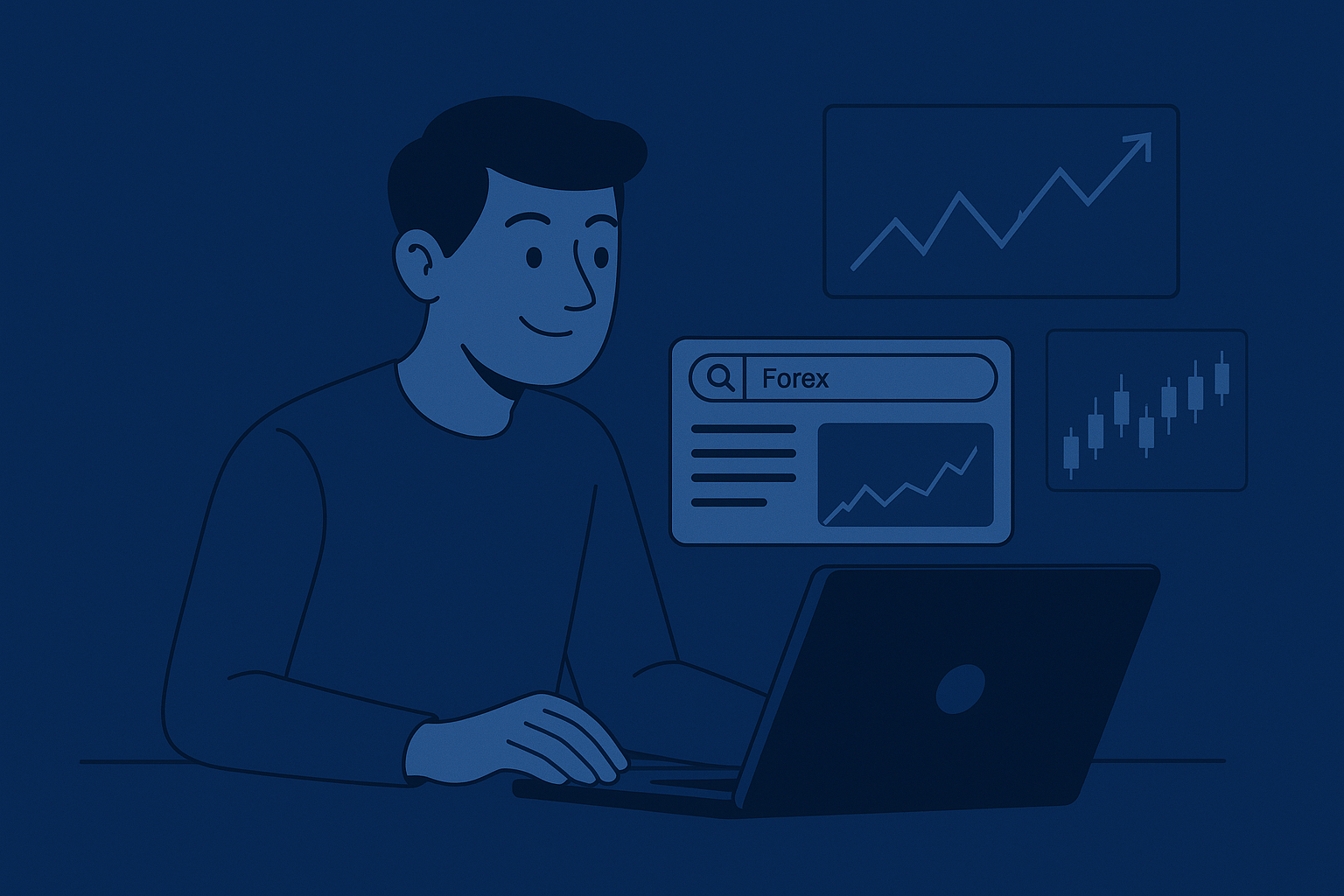
A forex platform is the software you use to interact with the foreign exchange market. Through this platform you can:
- View real-time price quotes and charts
- Place market, limit, and stop orders
- Manage open positions and pending orders
- Track your account balance, equity, and margin
- Use indicators, tools, and sometimes automated systems
Forex platforms can be installed on your computer, used in a browser, or run as a mobile app. Some are simple and beginner friendly. Others are packed with advanced features for experienced traders and for those who use automation and algorithms.
Types Of Forex Platforms
Not all forex platforms are the same. Understanding the main types helps you choose what works best for your situation.
Broker proprietary platforms
Many brokers offer their own trading platform. These are designed specifically for that broker’s services and often integrate account management, deposits, and trading in one place.
Strong sides usually include:
- Tight integration with the broker’s back office
- Specific tools or layouts tuned for that broker’s clients
- Direct access to the full list of instruments that broker offers
Limitations can include:
- Less flexibility if you want custom indicators or automated strategies
- Harder to move to another broker if you are used to that one platform only
Third party trading platforms
Some of the most widely used forex platforms are third party platforms supported by many brokers. They are popular because they:
- Offer a consistent interface across several brokers
- Have large communities and lots of educational content
- Support custom indicators, scripts, and expert advisors
Since these platforms are common, you can often take your tools and setups with you if you ever change brokers, as long as the new broker supports the same platform.
Web platforms and mobile apps
Many forex platforms now run in the browser and on mobile devices. Web platforms are convenient because you can log in from any computer with an internet connection. Mobile apps allow you to monitor and manage trades when you are away from your desk.
The trade off is that very complex tasks, such as detailed backtesting or building advanced automated systems, are often easier on a desktop platform.
Core Features To Look For In Forex Platforms
When you compare forex platforms, focus on the features that affect your day to day trading experience. Some key areas include:
- Ease of use: Is the layout clean and logical, or cluttered and confusing?
- Stability: Does the platform run smoothly without constant freezes or crashes?
- Execution: Can you place orders and modify them quickly and reliably?
- Charting tools: Do you have the timeframes, indicators, and drawing tools you need?
- Order types: Are stop orders, limit orders, stop loss, and take profit features easy to set?
- Risk controls: Can you see margin, free margin, and open risk clearly?
A simple, stable platform is usually better than a complex one that you do not fully understand.
Order Types And Execution On Forex Platforms
Order handling is at the heart of forex platforms. Understanding the basic order types helps you control how you enter and exit the market.
- Market order: Opens or closes a trade at the current available price.
- Limit order: Enters a trade at a better price than the current market price.
- Stop order: Enters a trade if the price moves to a specified level, often used to catch breakouts.
- Stop loss: Closes a losing trade in order to cap the loss at a predefined level.
- Take profit: Closes a winning trade when price hits your target.
Some forex platforms also support more advanced order types, such as trailing stops or partial take profits. These features can help you manage risk in a more flexible way if you know how to use them.
Charting And Analysis Tools On Forex Platforms
Most forex platforms include charting tools. The quality of these tools can vary a lot. When you look at different forex platforms, consider whether they offer:
- Multiple timeframes, from one minute to daily and higher
- Popular indicators such as moving averages, RSI, MACD, and Bollinger Bands
- Drawing tools like trendlines, horizontal lines, Fibonacci retracement, and channels
- The ability to save templates and layouts for your favorite setups
Good charting tools do not guarantee success, but they make it easier to analyze trends, structure, and momentum. This helps your strategy and your risk management.
Risk Management Features Built Into Forex Platforms
A key part of what you need to know about forex platforms is how they help you manage risk. Strong risk tools can include:
- Clear display of account balance, equity, margin, and free margin
- Easy to set stop loss and take profit orders when you open a trade
- One click options to close all trades or close all trades on a given pair
- Margin warnings when your equity is getting low
- Trade history and performance reports
These features make it easier to see your overall exposure and to react quickly if the market moves against you. They also support good habits, like always trading with a stop loss.
Get Kraitos Elite Now!
Supercharge your trading with our expert advisors. Start your journey today!
Forex Platforms And Automation At Auvoria Prime
Automation is an important topic for many traders today. Some forex platforms support expert advisors and automated strategies that can open, manage, and close trades based on predefined rules.
Automation can help you:
- Follow a strategy without emotional interference
- Monitor markets when you are not at your desk
- Execute complex rules exactly as written
At Auvoria Prime, the focus is on providing tools, data, and education that work together with forex platforms. The goal is not to replace the trader, but to support better decisions. That includes:
- Software products that can connect with compatible forex platforms
- Education about how automated strategies behave in real market conditions
- Guidance on risk settings and performance monitoring
Automation does not remove risk. It shifts your work from placing each trade by hand to choosing, understanding, and supervising the strategies that run on your platform.
Common Mistakes Traders Make With Forex Platforms
Many problems new traders face are not about strategy, but about how they use their forex platform. Some common mistakes are:
- Trading live money on a new platform without practicing in a demo account
- Not understanding how to set or modify stop loss and take profit orders
- Ignoring margin and leverage and only watching the profit and loss line
- Running multiple indicators or expert advisors they do not fully understand
- Failing to record trades or review platform statements
Taking time to learn your platform, even if it feels boring, can prevent many avoidable errors. Practice placing different order types, experiment with small position sizes, and use demo modes to learn the workflow before you trade with serious capital.
How To Test A Forex Platform Safely
Before you rely on any forex platform, test it in a structured way. A simple process might look like this:
- Open a demo account with the platform.
- Learn how to place market, limit, and stop orders.
- Practice setting stop loss and take profit levels.
- Open and close several trades in different market conditions.
- Try the mobile app and web versions if they are available.
- See how reports and history are displayed and exported.
When you later move to a live account, start with small trades. Focus on whether the platform behaves the same as it did in demo, and whether execution is reliable when volatility rises.
Building Your Personal Forex Platform Checklist
Every trader is different, so it helps to create your own checklist when comparing forex platforms. Your checklist might include items like:
- Is the interface clear and easy to navigate for me?
- Do I have the charting tools I actually plan to use?
- Can I manage risk quickly, even under pressure?
- Is there support for automation or external tools if I plan to use them?
- Does the platform feel stable on my computer, browser, and phone?
- Can I access useful education and help if I get stuck?
The best forex platform is not always the one with the longest feature list. It is the one that fits your style, supports your risk management, and lets you execute your plan without unnecessary friction.
Risk Disclaimer
Trading foreign exchange on margin carries a high level of risk and may not be suitable for all investors. The leverage available in forex platforms can work against you as well as for you. Before deciding to trade forex or use any trading platform, you should carefully consider your investment objectives, level of experience, and risk tolerance.
You could lose some or all of your initial investment. You should not trade with money that you cannot afford to lose. You should be aware of all the risks associated with foreign exchange trading and, if you have any doubts, seek advice from an independent financial advisor.
Nothing in this article is financial, investment, tax, or legal advice. It is provided for educational and informational purposes only. Auvoria Prime does not guarantee any profits or specific outcomes from the use of any forex platforms, tools, or services. You are solely responsible for your own trading decisions and results.
Quantitative Trading: A Complete Guide to Data-Driven Trading Strategies
Quantitative trading has changed the way many traders approach financial markets. Instead of making every decision based on instinct, chart…
CFDs Meaning Trading: A Complete Guide to Understanding Contracts for
One term that frequently appears in online trading is CFDs. If you’ve searched for CFDs meaning trading, you’re likely looking…
FGP1 August 2026 Performance Overview
Geographic Restriction & Risk Notice FGP1 is geographically restricted and is not available to U.S. persons or residents. Trading involves substantial…
Best Robo Advisors: A Complete Guide to Automated Investing
Choosing how to invest has become easier than ever thanks to technology. One of the biggest innovations in recent years…
Best Day Trading App: What Traders Should Look for Before
Day trading has become more accessible than ever. With the rise of mobile technology, cloud-based platforms, and real-time market data,…
FGP1 July 2026 Performance Overview
Geographic Restriction & Risk Notice FGP1 is geographically restricted and is not available to U.S. persons or residents. Trading involves substantial…